A 12-month case study: how a HubSpot-native marketplace went from around $3k to $40k+ a month by connecting demand, conversion and revenue into one system.
Short answer
You turn an early-stage idea into predictable revenue by building three things and connecting them: a demand engine that brings in consistent, high-intent enquiries, a conversion system that closes the right ones, and a revenue model that makes the activity pay. When Profoundly, a HubSpot-native demand marketplace, did this over twelve months, project demand grew 10x, jobs won grew 15x, and monthly revenue went from around $3k to $40k+.
Quick answer
- Most early-stage businesses do not fail on the idea. They stall because nothing connects the idea to repeatable revenue.
- A demand engine has three parts: demand generation, conversion and a revenue model. They have to work as one system, not three separate projects.
- The build spanned nine connected pieces, from a rebrand and new website to SEO, AEO, content, social, HubSpot Partner outreach, interactive intake and AI-driven email segmentation.
- Profoundly grew project demand from around 2 to 20+ per week, jobs won from around 0.5 to 8+ per week, and revenue from around $3k to $40k+ per month in 12 months.
The biggest shift was structural, not tactical. Demand, conversion and revenue stopped being separate problems.
Most founders do not have an idea problem. They have a system problem. The concept works well enough to win the occasional project, but nothing underneath it turns that promise into steady, predictable income. As we have written before, real growth is about more than clicks and traffic; it is about building a system that performs month after month.
This article walks through how to build that system, using a real twelve-month engagement as the worked example. The business, Profoundly, is a demand marketplace built inside the HubSpot ecosystem. It had a strong idea and an early product, but no engine underneath it. Here is how the engine was built, piece by piece, and what you can take from it for your own business.
What is a demand engine, and why does an idea need one?
A demand engine is a repeatable system that generates consistent, high-intent enquiries, converts the right ones into won work, and pays for itself through a revenue model built for scale.
An idea on its own produces sporadic projects. Someone hears about you, a job comes in, you deliver it, and then you wait for the next one. That is not a business model, it is a series of lucky breaks. A demand engine replaces luck with a system: demand arrives on purpose, conversion happens by design, and revenue follows a model you can forecast.
The key word is connected. Demand, conversion and revenue are not three separate campaigns or three separate tools. They are three stages of one engine, and the engine only works when they are joined up.
Why do early-stage businesses stall even with a strong idea?
Early-stage businesses stall because the work to turn an idea into revenue is invisible until you measure it, and most founders are too busy delivering to build it. The result is thin demand, low conversion and revenue with no model behind it.
Profoundly is a clear example. Before the engagement, the picture looked like this:
The concept was promising. The system to turn that concept into revenue simply did not exist yet. That is the gap a demand engine fills.
What are the foundations of a demand engine?
The foundations are clear positioning and a place for demand to convert. Before you scale traffic, buyers need to understand instantly what you do and why it is for them, and they need somewhere built to turn interest into action.
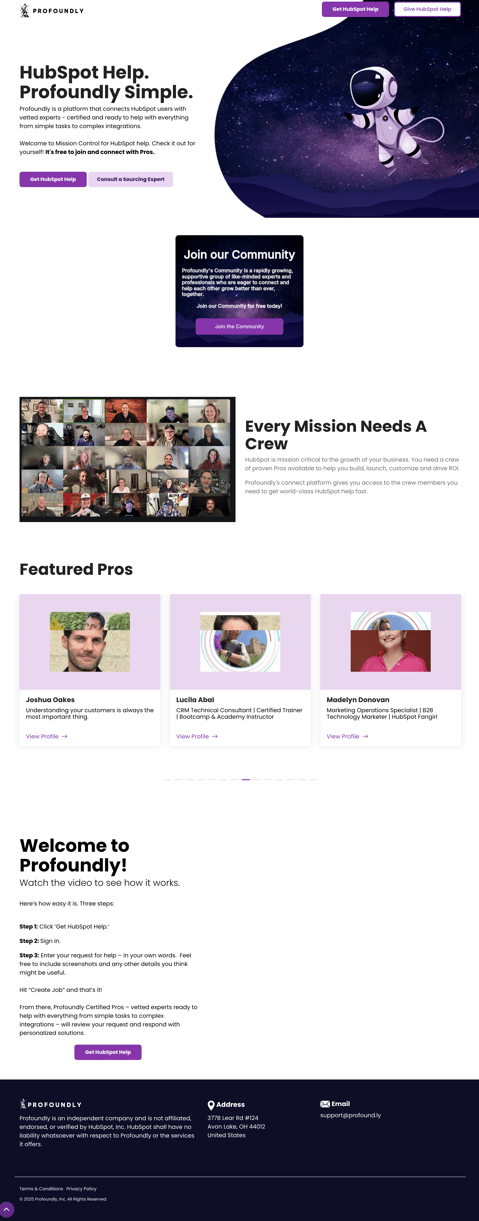
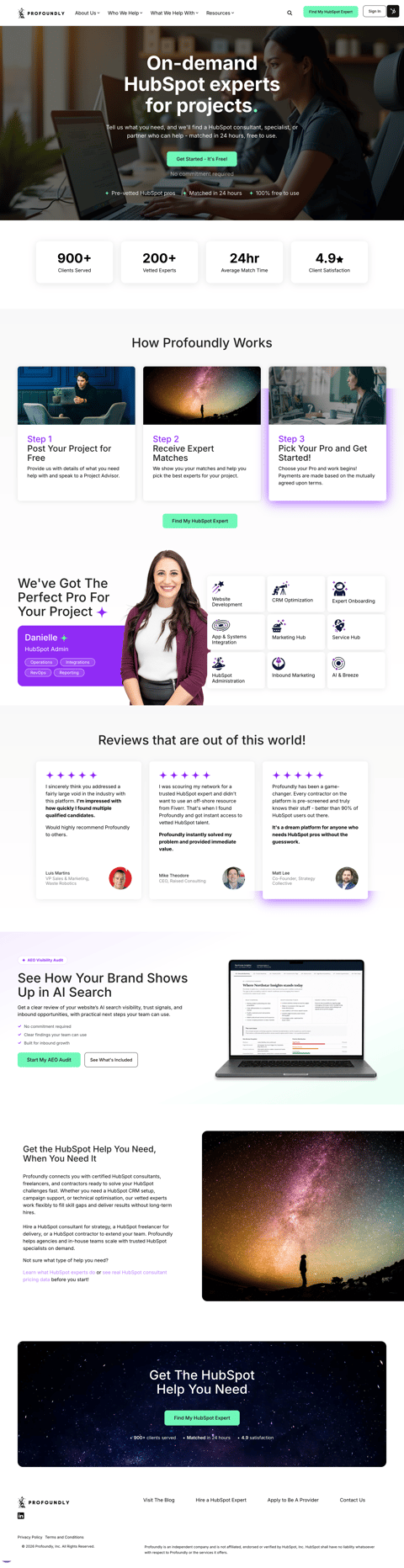
For Profoundly, that meant two things first. A rebrand sharpened the positioning, so the right buyers understood the offer at a glance. Then a new website gave demand a conversion-focused home, rather than a brochure that simply described the business. Scaling demand into a weak position or a poor website just means paying to lose people faster, which is why this positioning-first approach comes before any spend on traffic.
How do you build consistent, high-intent demand?
You build consistent demand across several channels that reinforce each other, engineered for intent rather than raw volume. The goal is a steady flow of the right enquiries from people ready to act, not a spike of traffic that never converts.
For Profoundly, the demand side combined SEO for consistent, high-intent organic visibility; AEO (answer engine optimisation) so the brand appears in AI and answer-engine results, where more buyers now start their search; content production to fuel both and prove expertise; regular social media to keep the brand present and trusted; and direct email outreach to build new HubSpot Partner relationships, opening a referral and partnership channel.
No single channel carried the load. Volume alone is a vanity metric. Volume of the right enquiries, arriving predictably from several reinforcing sources, is the foundation everything else sits on.
How do you convert more of the right enquiries?
You convert more by qualifying and matching at the point of entry, sending buyers to a site built to convert, and working your existing database intelligently. More enquiries are worthless if the wrong ones clog the pipeline.
Profoundly's conversion system was rebuilt around three moves. An interactive intake for new jobs qualified and matched each enquiry as it arrived, so the right jobs reached the right supply and the team stopped losing time on poor-fit work. The new website turned that qualified interest into booked work. And AI-driven database segmentation for email marketing turned a static contact list into targeted campaigns that re-engaged and converted people already inside the ecosystem.
The aim was never to win more jobs in total. It was to win more of the right ones, which is what protects margin as you scale.
How do you turn activity into predictable revenue?
You turn activity into revenue by designing a model that monetises the engine predictably, rather than charging project by project and hoping it adds up. Without a model, growth in activity does not reliably become growth in profit.
For Profoundly, the first real revenue model combined LeadFlow with commission. That turned day-to-day activity into predictable, scalable income. The segmented email programme then compounded it, generating repeat and expansion revenue from the existing database rather than always paying to acquire someone new. Together they gave the founders something they had never had before: a clear, forecastable line between effort and earnings.
|
Not sure whether your bottleneck is demand, conversion or your revenue model? A short growth conversation with Imagine Growth will tell you where the leak is, and what to fix first. |
What does a full demand engine include?
A demand engine is not one tactic, it is a connected set of building blocks, each with a specific job. Here are the nine pieces built for Profoundly, and what each one does.
|
Building block |
Its job in the engine |
|
Rebrand |
Sharper positioning, so the right buyers understood the offer at a glance. |
|
New website |
A conversion-focused home for demand to land and act on. |
|
SEO |
Consistent, high-intent visibility in organic search. |
|
AEO |
Visibility in AI and answer-engine results, where buyers increasingly ask questions. |
|
Content production |
The fuel for SEO, AEO and social, and the proof of expertise that builds trust. |
|
Regular social media |
An ongoing presence that keeps the brand warm and top of mind. |
|
HubSpot Partner outreach |
Direct email relationships that opened a referral and partnership channel. |
|
Interactive intake |
Qualified and matched every new job at the point of entry. |
|
AI email segmentation |
Turned the existing database into repeatable, targeted revenue. |
On their own, any one of these is just an activity. Connected, they become an engine: positioning tells the right people why to care, demand channels bring them in, intake and the website convert them, and the revenue model and email programme turn the whole thing into predictable income.
What results can a connected demand engine produce?
A connected demand engine compounds, because every stage feeds the next. Over twelve months, every metric in Profoundly's engine moved together rather than in isolation.
|
Metric |
Before |
After (12 months) |
|
Project demand |
~2 / week |
20+ / week |
|
Jobs won |
~0.5 / week |
8+ / week |
|
Monthly revenue |
~$3k |
$35k to $40k+ |
In multiples, that is roughly 10x project demand, 15x more jobs won, and 12x monthly revenue in a single year. The numbers are striking, but the reason they held is what matters: they were the output of a system, not a one-off campaign.
Why does connecting the system matter more than any single tactic?
Connecting the system matters more than any single tactic because tactics produce spikes, while a connected system produces a trend. When demand, conversion and revenue are designed together, growth stops being sporadic and starts being predictable.
This is the same operating model we bring to every B2B growth problem, and it sits at the heart of our growth methodology. It is also why we apply AI and automation with discipline rather than as a gimmick: used well, AI is a force multiplier on a system that already works, which is exactly what the interactive intake and AI email segmentation did here.
For Profoundly, the bigger shift was structural. The business went from an early-stage concept to a proven, scalable demand engine, and the primary demand engine within its corner of the HubSpot ecosystem. More importantly, it now has a clear monetisation model and a credible path toward exit. Demand, conversion and revenue work as one connected system, rather than three separate problems.
Website Before
Website After
Frequently asked questions
How long does it take to build a demand engine?
It varies by business, but meaningful results are typically a matter of months rather than weeks. Profoundly's engine was built and scaled over twelve months, with demand, conversion and revenue improving together across that period rather than all at once.
What is AEO, and why does it matter for demand?
AEO stands for answer engine optimisation: making sure your business appears in AI assistants and answer engines, not just traditional search results. It matters because a growing share of buyers now get answers directly from AI rather than clicking through to websites, so visibility there is becoming as important as classic SEO.
Do you need a rebrand to build a demand engine?
Not always, but you do need clear positioning. If buyers cannot tell instantly what you do and why it is for them, more traffic simply means losing more people faster. For Profoundly, a rebrand was the fastest way to fix positioning before scaling demand into it.
How does an interactive intake improve conversion?
It qualifies and matches every enquiry at the point of entry, so the right jobs reach the right supply and the team stops spending time on poor-fit work. That lifts conversion rates and protects margin, because effort concentrates on the opportunities most likely to close well.
What is a LeadFlow plus commission revenue model?
It combines a predictable flow of qualified leads with a commission earned on the work those leads generate. It ties income directly to the activity of the engine, which makes revenue easier to forecast and scale.
How do I know whether my business has a demand problem or a conversion problem?
Look at where the drop-off is. If too few of the right enquiries arrive, you have a demand problem. If enquiries arrive but few become won work, you have a conversion problem. Most early-stage businesses have both, plus no revenue model, which is why fixing the three together works better than fixing one in isolation.
Ready to turn your idea into a demand engine that pays?
Imagine Growth builds and scales demand, conversion and revenue into one connected system inside HubSpot, the same operating model behind Profoundly's growth from concept to $40k+ a month.
Book a growth session to find your biggest bottleneck and the fastest path to predictable revenue.